
Context engineering for AI agents at scale with DataHub
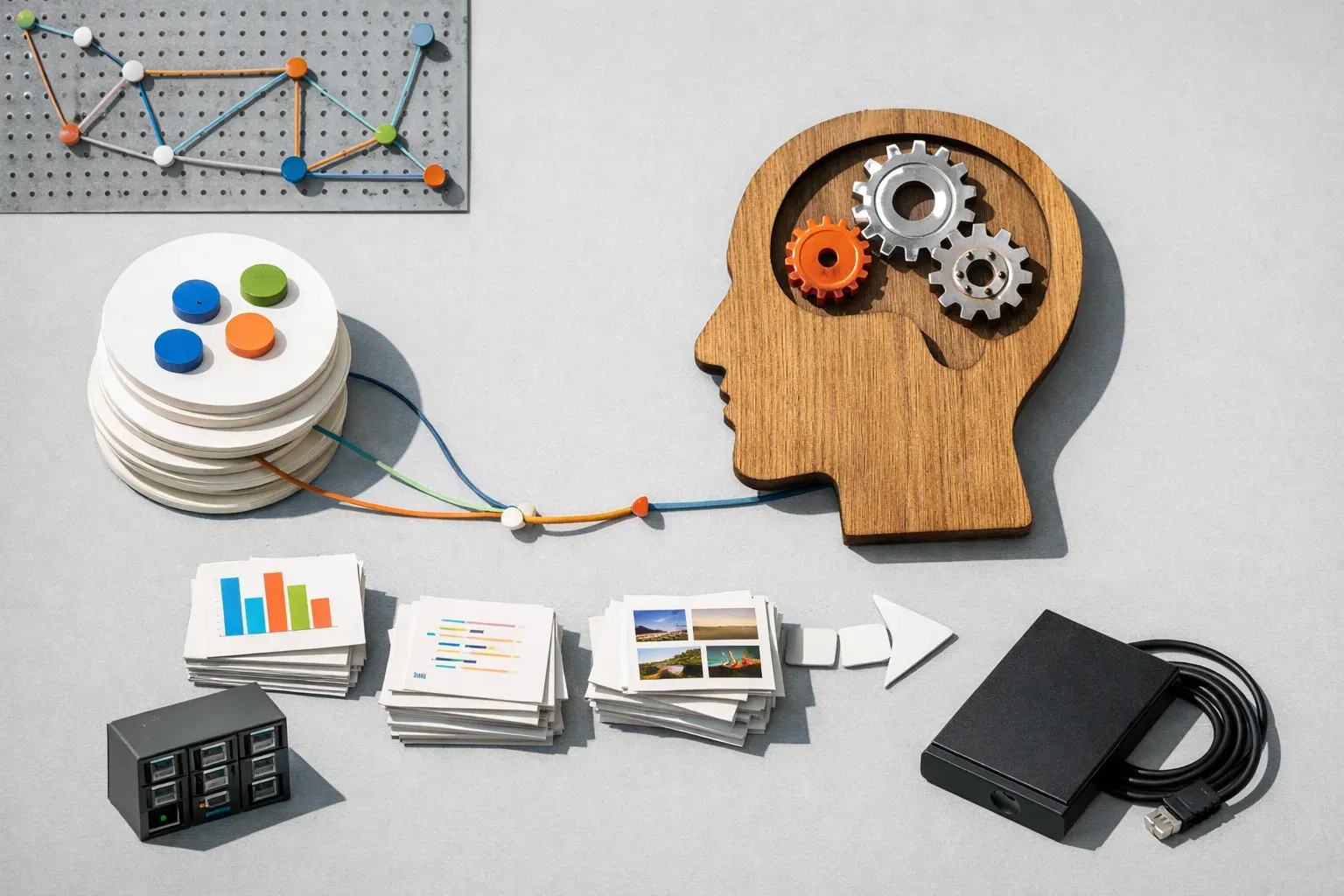
AI agents fail fast when the right context is scattered across tools, stale in chat history, or trapped in one model's prompt window. The practical fix is not a longer prompt. It is a shared context layer that stores durable work objects, validates them, and makes them available wherever the agent works.
Streamient is built for that job. It gives teams one editable memory layer for notes, URLs, email, Git work, and other source records, then exposes that knowledge through MCP-compatible clients so tools like Claude, Cursor, ChatGPT, Windsurf, and Zed can read and write the same context. That is the core of context engineering at scale: build once, activate everywhere.
A good reference point for this shift is DataHub's "Context Engineering for AI Agents at Scale," which frames the problem around validated context reaching multiple surfaces through an MCP server, pre-built skills, and APIs. DataHub's article is a useful signal that the category is moving from prompt tricks to shared, governed context.
What context engineering means for AI agents
Context engineering is the work of deciding what an agent should know, where that knowledge comes from, how fresh it is, and when it should be used. For AI agents, that means more than stuffing a large prompt. It means controlling retrieval, provenance, scope, and reuse across sessions and tools.
In Streamient, that context can come from:
- notes that capture decisions and task state
- URLs that preserve the source behind a recommendation
- email threads that explain customer or project history
- Git records that keep architectural decisions tied to code
- temporal graphs that show how facts changed over time
- team knowledge that can be inspected, corrected, and reused
This matters because agents do not just need memory. They need memory they can trust. If a model cannot show where a fact came from, the answer may be useful once and unreliable the next time.
Build one context layer, not one-off prompts
The easiest way to make AI agents brittle is to rebuild context in every tool. A support agent, coding assistant, and research workflow may all need the same underlying facts, but they do not need the same presentation of those facts. Streamient separates the durable record from the client-specific view.
That gives teams a few advantages:
- One source of truth: The note, email, URL, or Git record that established a fact stays attached to the fact.
- Cross-tool continuity: A decision captured in Claude can reappear in Cursor without manual copy-paste.
- Inspectable output: Teammates can review, edit, and delete the exact source record behind an AI answer.
- Lower prompt clutter: The agent retrieves only what it needs instead of carrying every historical detail in the prompt.
This is the point where context engineering becomes operational instead of theoretical. You are not asking the model to remember more. You are giving it a reliable system for finding the right thing at the right time.
How Streamient supports agentic context at scale
Streamient is designed as a shared memory layer for teams, not as a black box assistant feature. That means the objects in the system are real work objects, not vague embeddings with no owner and no history.
A few parts matter most:
- Persistent context: Keep important decisions alive across sessions instead of losing them when a chat closes.
- MCP access: Connect compatible tools through the same shared context layer.
- Retrieval tools: Use search and recall functions tuned for AI queries, so agents pull back focused context instead of a dump of everything.
- Team editability: Let people correct source records when a model gets something wrong.
- Security and control: Scope access, inspect records, and self-host when that fits the team.
You can see the broader feature set on the Streamient features page, and you can compare deployment and control options on the Streamient compare page.

Why MCP changes the context layer
MCP is important because it gives the agent a standard way to reach shared context from different tools. Instead of building a separate memory path for each client, you expose one memory layer through a protocol that compatible clients can use.
That is what makes "build once, activate everywhere" more than a slogan. A single Streamient workspace can serve:
- a coding assistant working inside Cursor
- a research workflow inside Claude
- a support workflow that needs stored customer context
- a custom internal agent that needs trusted facts from notes and email
- a terminal-based workflow that should read the same knowledge as the chat UI
Streamient's MCP setup is especially useful when the same fact needs to travel across surfaces without losing its origin. For example, a product decision captured in a Git note can later inform a code review, then show up again in a customer support reply, all without retyping the explanation.
If you want a concrete example of multi-tool continuity, the Streamient page on persistent memory for Claude Desktop shows how the same memory layer can serve different MCP-compatible clients.
What "validated context" should look like
Not every piece of information deserves to enter agent memory. Validated context is selective. It has a source, a scope, and a reason to stay.
A practical rule set looks like this:
- capture decisions, not just discussion
- store source links with the record
- keep project scope explicit
- mark stale facts as superseded instead of erasing history
- retrieve fewer records, but better ones
- review anything that will be reused by a model
This is where temporal knowledge graphs help. They let you keep the history of a fact instead of flattening it into a single current value. Streamient's temporal knowledge graphs guide explains why that matters when multiple tools need different slices of the same context.
The practical outcome is better agent behavior. A support agent can see the current policy, a coding agent can see the architecture decision that led to the policy, and a researcher can trace both back to the original note or email.
A simple workflow for context engineering in Streamient
If you are setting this up for a team, start small and make the workflow explicit.
- Capture the source record
Add the note, email, URL, or Git reference that actually established the fact. - Label the scope
Mark whether the context applies to one project, one client, one repository, or the whole team. - Attach a reason
Store why the decision exists, not just the outcome. Future agents need the rationale as much as the answer. - Retrieve through the MCP client
Let the agent fetch context when needed instead of pasting it into every prompt. - Review and correct
If the model produces a weak answer, fix the source record or tighten the retrieval scope. - Expire or supersede stale facts
Keep the history, but make the current state obvious.
That process is simple, but it scales well because it keeps the record and the retrieval path separate. Teams do not have to choose between memory that is too loose and memory that is too rigid.
Where Streamient fits in the agent stack
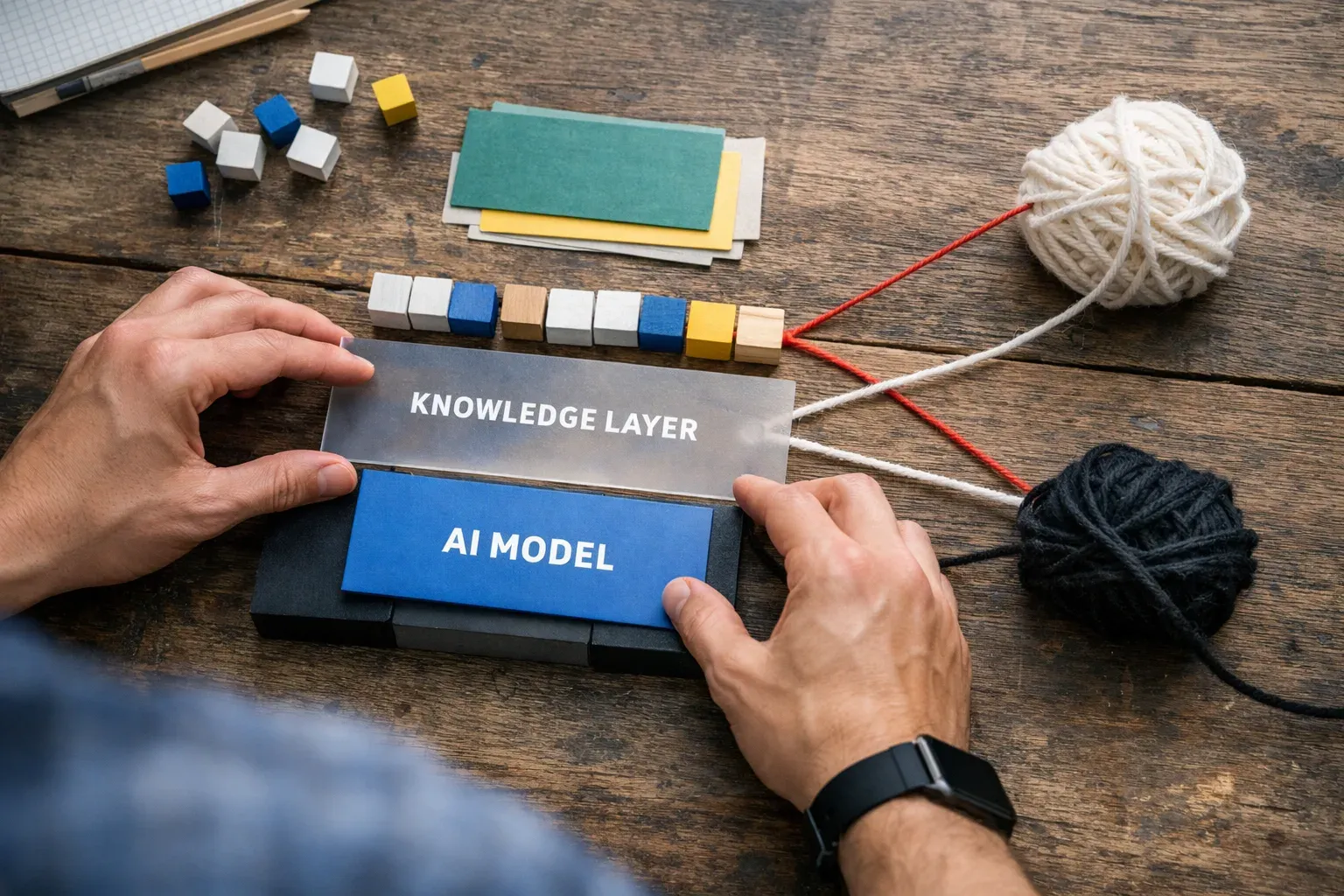
Streamient is not trying to replace the model. It sits in front of the model as the durable knowledge layer.
Use it when you need:
- shared context across Claude, Cursor, ChatGPT, and other MCP-compatible tools
- editable memory that a team can inspect
- source-backed records for decisions, support history, and research
- a place for email, URLs, Git history, and notes to live together
- self-hosting or controlled access for sensitive work
That makes it a better fit than a simple prompt template or a local briefing doc. It also makes it more durable than memory hidden inside a single app, because the context belongs to the team, not the client.
For a broader view of how Streamient handles real team knowledge, the AI knowledge base article is a useful companion piece. For code-oriented workflows, the AI memory for code review guide shows how source-backed memory changes review quality without replacing the repo itself.
Security and trust are part of context engineering
At scale, context engineering is also a security problem. If any client can retrieve anything, the memory layer becomes a liability. If old context is never reviewed, it becomes a source of accidental poisoning. If the team cannot see the source behind a fact, trust drops fast.
Streamient's model is built around inspectability and control, which is why security belongs in the design from the start. Teams can keep ownership of the workspace, scope access, and use self-hosted deployment when they need tighter control over where context lives.
That matters because AI agents are most useful when they can fetch the right information without overreaching. Narrow retrieval and clear provenance are what make the system reliable enough for real work.
The bottom line
Context engineering for AI agents at scale is really about shared memory, clean provenance, and controlled retrieval. Streamient gives teams a practical way to do that with notes, URLs, email, Git, temporal graphs, and MCP access in one editable knowledge layer.
If you want AI agents to stay grounded across tools and sessions, do not ask them to remember more. Give them a context layer they can trust.
Frequently Asked Questions
What is context engineering for AI agents?
Context engineering for AI agents is the practice of deciding what context an agent should use, where that context comes from, and how it should be retrieved. It focuses on durable, source-backed knowledge rather than stuffing more text into a prompt.
How does Streamient support context engineering?
Streamient supports context engineering by storing team-owned notes, URLs, email, Git work, and memories in one shared layer. MCP-compatible clients can read and write that context, so the same validated knowledge can move across tools and sessions.
Why is MCP important for AI memory?
MCP is important because it gives multiple AI clients a standard way to access the same memory layer. That avoids building separate context paths for each tool and makes cross-tool continuity much easier to maintain.
What kind of context should not be stored?
Low-signal chatter, duplicate records, and unreviewed facts should not become durable memory. The best context is specific, source-backed, scoped, and easy to inspect or correct later.