MCP Is Great. It Still Does Not Solve AI Memory
MCP AI memory is being talked about as if it's already solved. It is not. Model Context Protocol is useful, important, and honestly, one of the best things to happen to AI tooling this year. But people keep making the same leap: if a tool supports MCP, they assume it now has real memory. That is like saying your house has running water because you installed pipes and forgot to connect them to anything that stores or delivers water.
That confusion is showing up everywhere. Builders wire Claude, Cursor, and half a dozen MCP servers together, then wonder why the assistant still forgets project decisions, repeats bad suggestions, and acts like every fresh session is the first day on the job. MCP helped the tools talk. It did not give them a brain that remembers what matters.
So let us say it plainly. MCP AI memory is not automatic. MCP is plumbing. Memory is the system that decides what to keep, how to retrieve it, when to update it, and how to make it useful across sessions and tools. Those are different jobs.
MCP solves connection, not continuity
MCP is a protocol. It gives AI tools a standard way to call external tools, fetch data, and act on systems outside the chat window. That matters a lot. Without it, every integration is a weird custom one-off. With it, builders get a more open and inspectable tool layer. That is a big win.
But a protocol does not decide what your AI should remember tomorrow. It does not store project rationale. It does not know which decisions matter in the long term and which were just temporary experiments. It does not separate durable context from disposable noise. It moves information around. That is all. Useful, yes. Magical, no.
This is why teams keep getting disappointed after the first setup rush. The MCP demo looks great. The assistant can open a file, hit an API, read a note, maybe even search a knowledge base. Then the next session starts, and the exact same human has to explain the same project constraints again. The tool stack got smarter. The working memory did not.
Why builders keep mixing the two up
Because on the surface, MCP and memory look adjacent. Both touch contexts. Both sit between the model and the outside world. Both can make an assistant feel more informed. So people collapse them into one bucket. That is understandable. It is also wrong.
A good way to separate them is this: MCP answers, "What can the assistant access right now?" Memory answers, "what should the assistant still know later without me re-explaining it?" Those are not the same question. One is about reach. The other is about continuity.
If you are a builder juggling ChatGPT, Claude, Cursor, or your own agent stack, continuity is the pain that keeps biting you. You can have perfect access to tickets, repos, docs, and files. If your assistant still forgets why you rejected approach B last week, the workflow is broken where it matters most.
Real AI memory needs four things that MCP does not provide
First, selection. A memory layer has to decide what deserves to be kept. Not every chat turn matters. Not every log line deserves immortality. The useful memories usually include project goals, constraints, naming conventions, prior decisions, failed attempts, open threads, and preferences that affect output quality. Raw access does not make those choices for you.
Second, retrieval. Memory is not just a bucket. If the right context does not show up at the right time, it is dead weight. Good retrieval means the assistant can pull the specific bit that matters for this session, not dump fifteen vaguely related notes into the prompt and call it intelligence.
Third, updating. Projects move. Yesterday's good plan becomes today's bad assumption. A real memory layer has to support correction, revision, and synthesis over time. If memory only grows and never gets cleaned up, it turns into a junk drawer with a search bar.
Fourth, portability. This one matters even more right now. Builders are done being trapped inside one vendor's half-memory. If your context only works within a single chat product, you do not own your workflow. You are borrowing continuity from a company that may change the rules next week.
This is where most so-called MCP memory setups fall apart
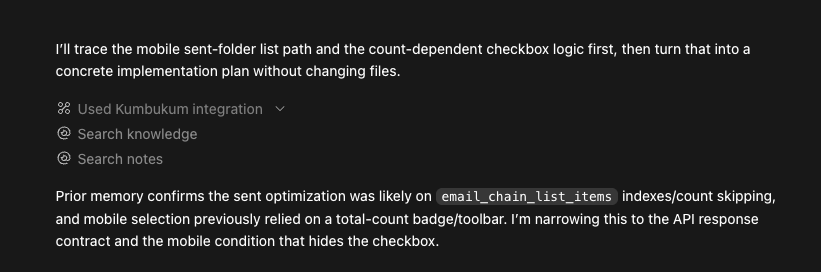
A lot of setups are really just retrieval on demand with a fancy badge on top. The tool can search notes. Great. The tool can fetch yesterday's transcript. Fine. The tool can read a markdown file full of hand-maintained instructions. Still no memory in the durable, useful sense. That is access plus manual labor.
The tell is simple. Ask yourself: if you open a fresh session tomorrow, will the assistant know what changed in the project without you doing the sync work yourself? If the answer is no, you do not have persistent memory. You have a collection of things your assistant can look at after you remember to point at them.
That distinction sounds picky until you are deep in real work. Then it becomes brutally obvious. The gap between "can retrieve a file" and "actually remembers the project" is the gap between a clever demo and a system you trust every day.
What builders actually want now
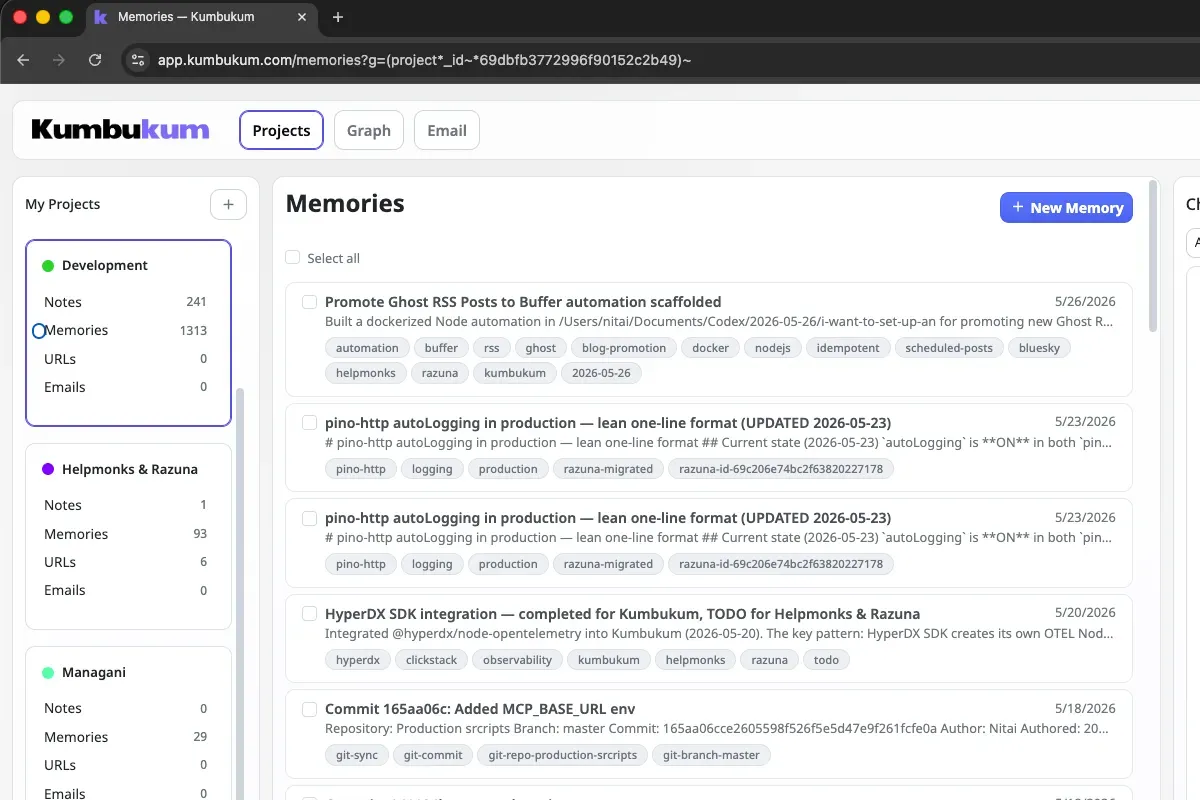
The shift in the market is no longer subtle. Builders want open, transparent, builder-first memory infrastructure. They want to inspect what is stored. They want to search it, edit it, scope it by project, and carry it across tools. They want less vendor theater and more systems they can reason about.
Builder-first also means this is inspectable: Kumbukum is open source. You can inspect the code, self-host it, or contribute to the GitHub repository.
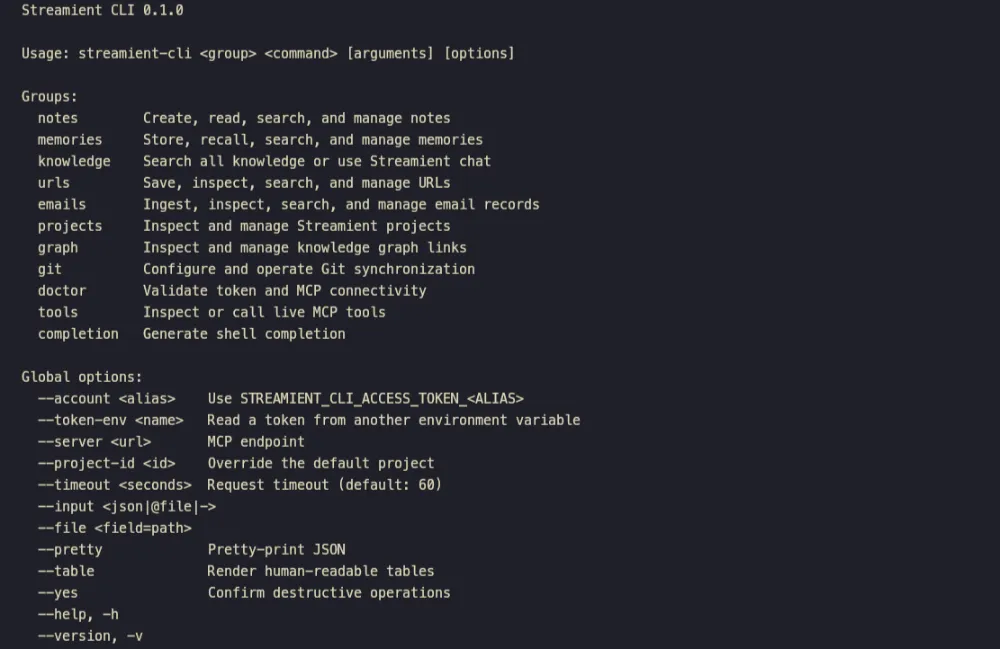
That is also where Kumbukum fits. Kumbukum is not pretending that MCP alone solves memory. It uses MCP because an open transport layer is the same way to connect tools. But the real value is the memory layer above that transport: persistent context, reusable recall, inspectable records, and continuity that follows you across compatible tools rather than getting trapped in one interface.
Open, transparent, builder-first is not a slogan here
This part matters because the market is changing fast. A black-box memory feature might feel convenient for a week. Then you realize you cannot audit it, shape it, export it, or trust its boundaries. That is not infrastructure. That is in line with retention settings.
Builder-first memory should be understandable. You should know what is stored, why it is stored, and how it will be returned. Transparent memory should not feel like a casino where you pull the prompt lever and hope the right fact appears. Open memory should survive tool churn, since churn is now normal.
That is why the strongest AI stacks are heading toward separation of concerns. One layer for tool access. One layer for memory. One layer for the interface. Swap the chat surface if you want. Swap the model if you need to. Keep the memory layer intact. That is a healthier architecture, and it is much closer to how serious builders already think about the rest of their systems.
The practical test
Here is the simplest test I know. Start a fresh AI session and ask it to continue a real project without any manual recap. If it can reliably recall the current goal, the key constraints, the major past decisions, and the known dead ends, you have something close to memory. If it starts guessing, re-summarizing, or asking you to paste the same context again, you mostly have plumbing.
MCP is still worth using. I am glad the ecosystem has it. It makes the tool layer less stupid. But the builders winning with AI right now are the ones who stopped confusing access with memory. They know a great protocol does not replace a great memory system.
If you want the open transport plus the persistent layer on top, read more on the Kumbukum blog. If you are done re-explaining your project to every fresh session, Try Kumbukum free.